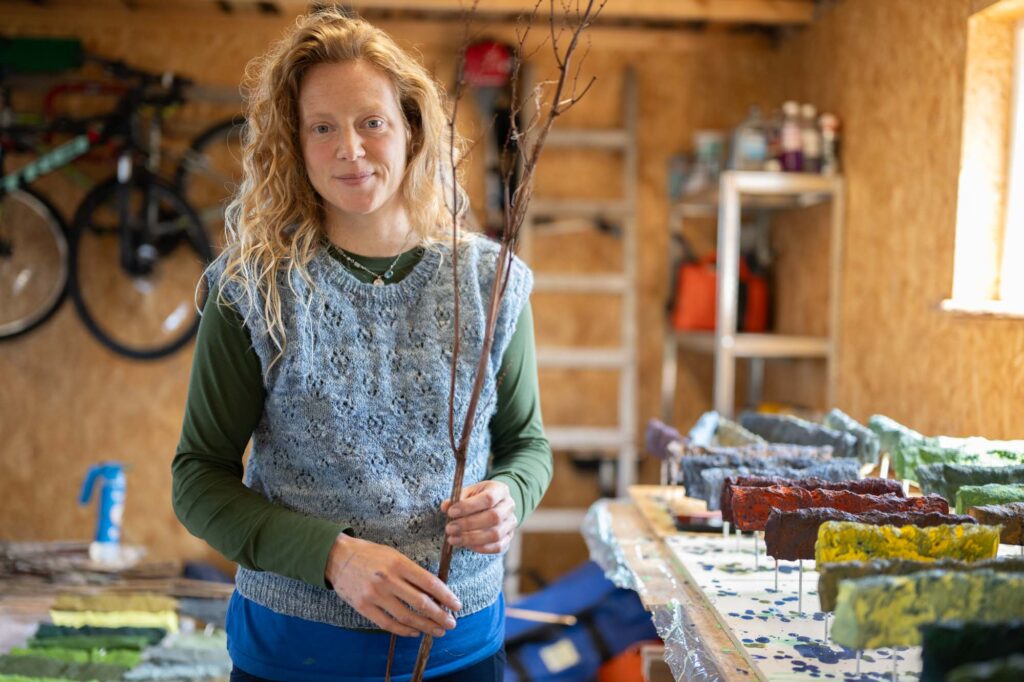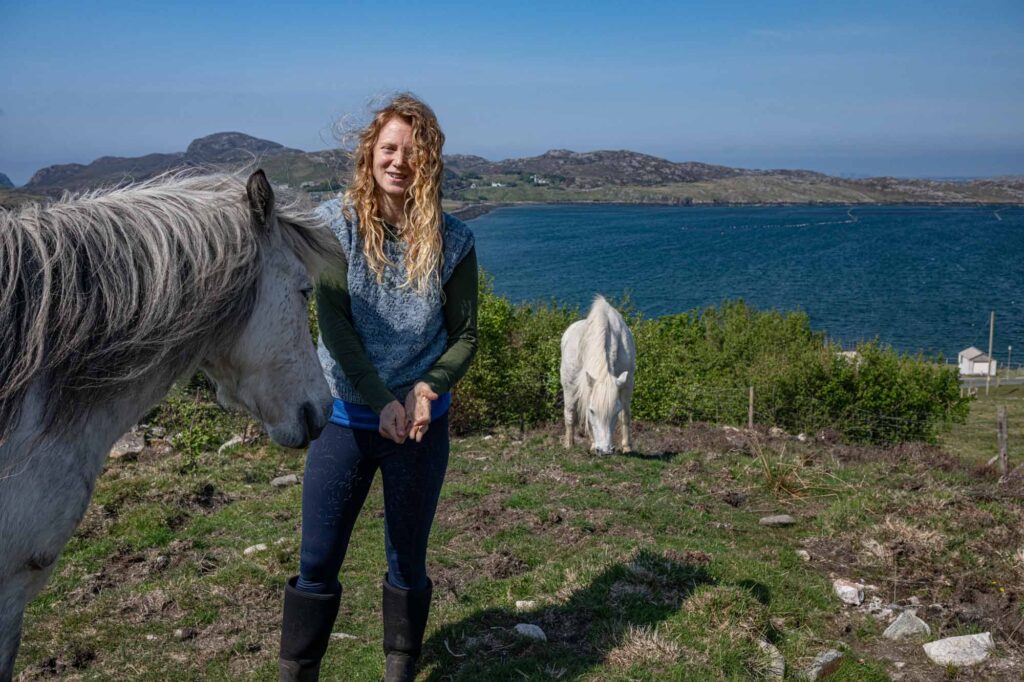

I awoke to a cloudy day with fog wrapping the cliffs around Bhaltos in a moody mist. I continued my pursuit of making environmental portraits and spent most of the day with Mairi Gillis, an accomplished Hebridean artist. Mairi embodies the spirit of the Hebrides and its people and is closely connected to the land and sense of place. Hospitality is a core tenet of their life and it is considered an insult if you are not offered refreshment when you go to someone’s home. She explained how the Gaels view property and ownership of the land. They do not feel that the land belongs to any one person – yes, it is where they live, where they come from, yet they do not own it in the way we see it, much like our native people. She gave an example using her two children who had gone on a field trip down to the sea and when crossing a bridge over the river spotted huge salmon and immediately thought of grabbing their fishing rods. Two girls in the group, whose father happened to own the estate on which they were walking told them they could not fish there because the fish belonged to their father. So Mairi asked her sons, if the fish swims out to sea does he still own it? Does he own the water in the river which has come from somewhere else and empties into the sea? He does not have ownership in the eyes of the Hebridean people.
There is a strong sense of community among the Gaels which is sadly being eroded by the people moving into communities who are not Gaelic and do not share the culture. They move onto crofts and put up fences denying other crofters access with their stock as was always the norm. Instead of seeing the crofts as land knit together by community, they carve out their “private” space and isolate themselves from the community. Mairi and others like her – like Magaidh Smith – are trying to preserve this culture and in many cases take back their communities from the landlords who own it so that a place is managed by the community and not some landlord removed from the culture.
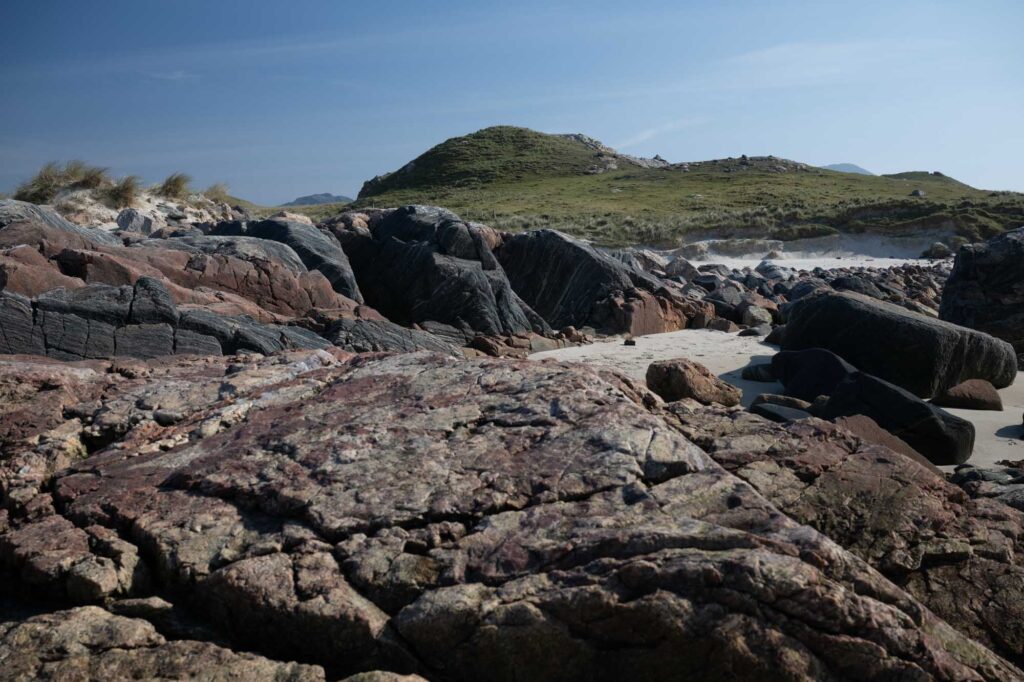
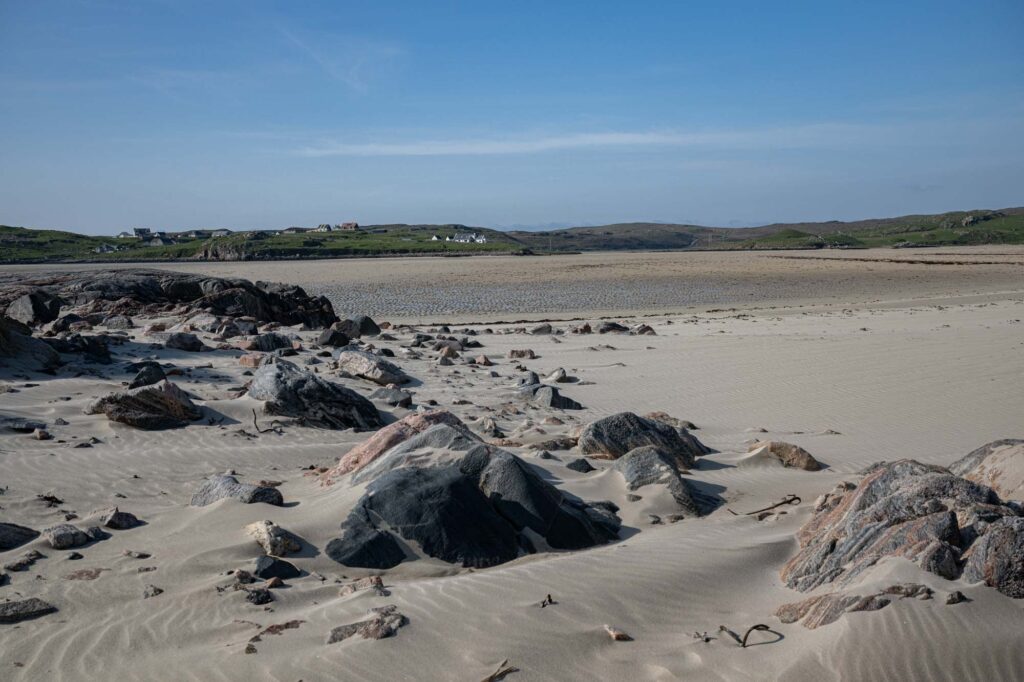
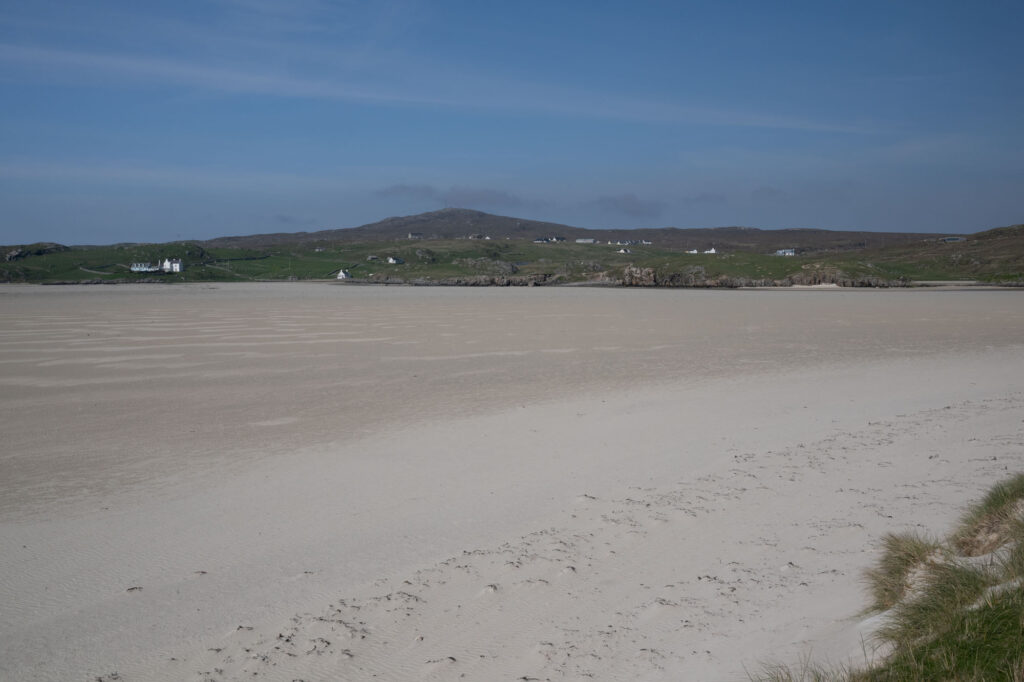
After leaving Mairi’s I wandered to the Ardroil Beach which is the area where the Lewis Chessmen were discovered. The actual place where they were dug up is unknown but it is widely accepted it was somewhere in the area of the Uig Sands. The beach was extremely wide and in some places close to shore it was strewn with Lewisian gneiss – some of the oldest rock on the planet. It seems that around every bend in the road on Lewis there is a vista unmatched by the previous one. Photographs might capture the visual experience but they cannot capture the feeling one has when experiencing this amazing land in person.