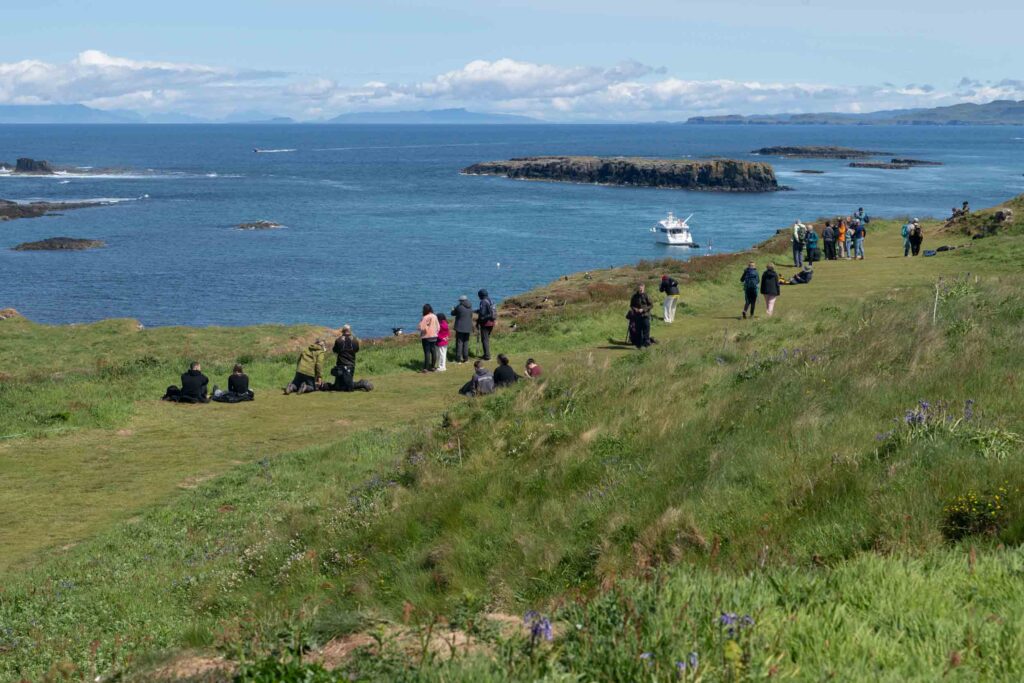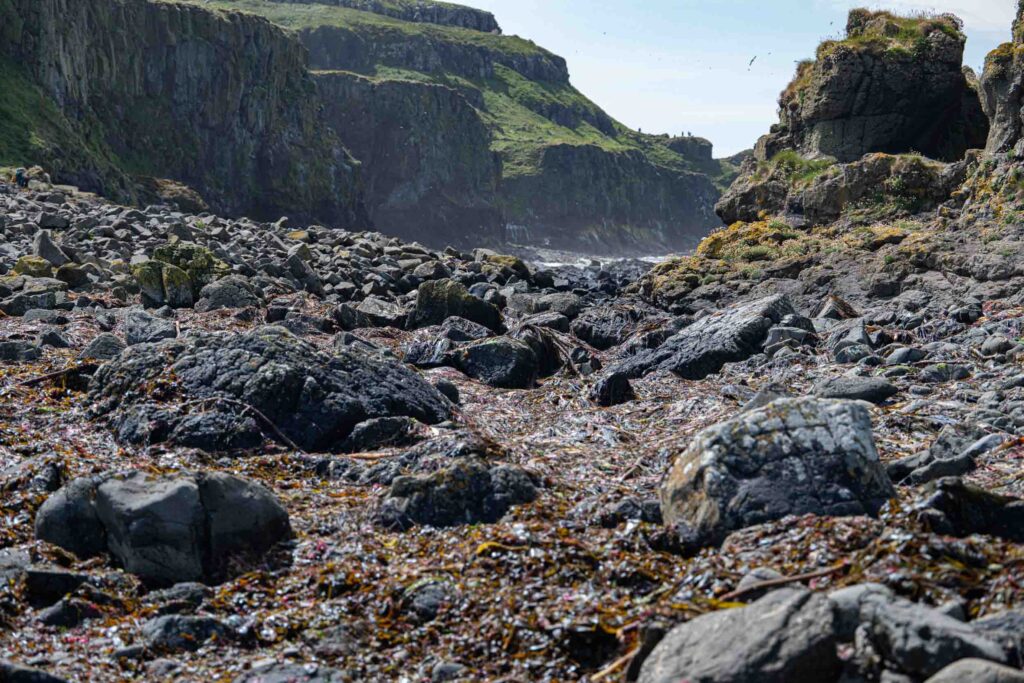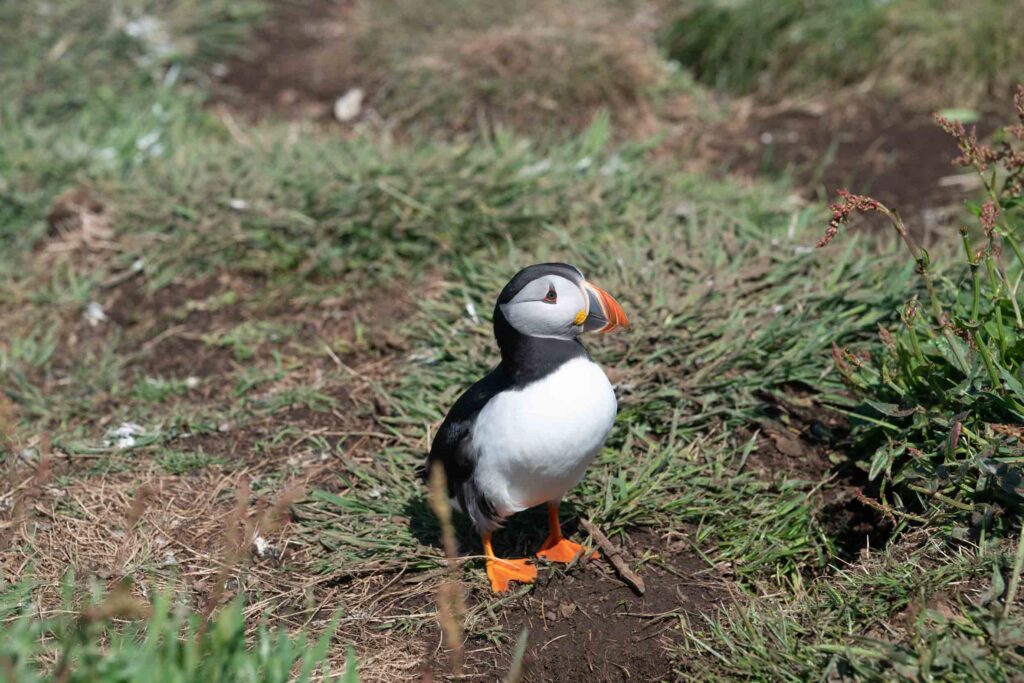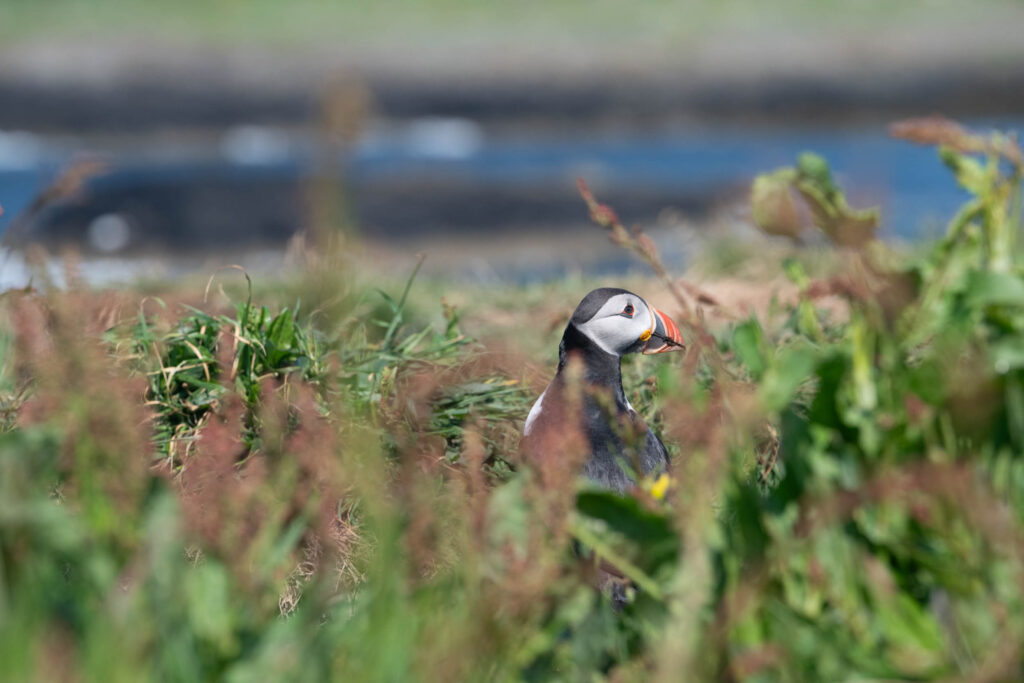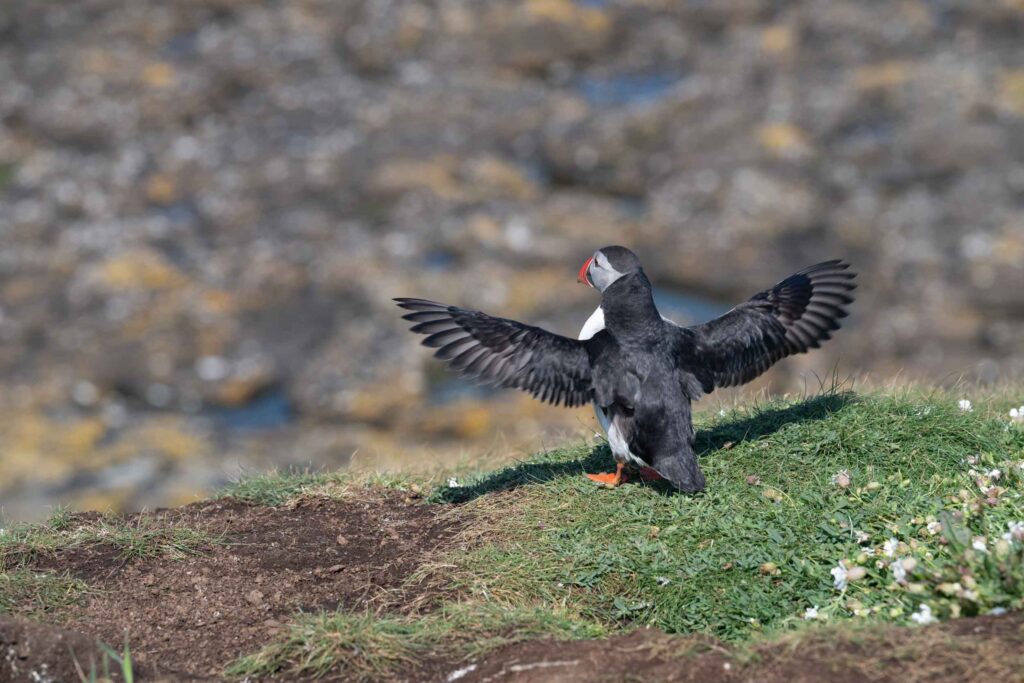

What started out as a foggy overcast day turned into a beautiful sunny day just perfect for my trip to Lunga, the largest island in the Treshnish Isles. We disembarked from our boat via a long pontoon which led us to a rocky beach. After crossing the rocky beach we climbed up to the top of a cliff which afforded a spectacular view and brought us within feet of the nesting puffins.
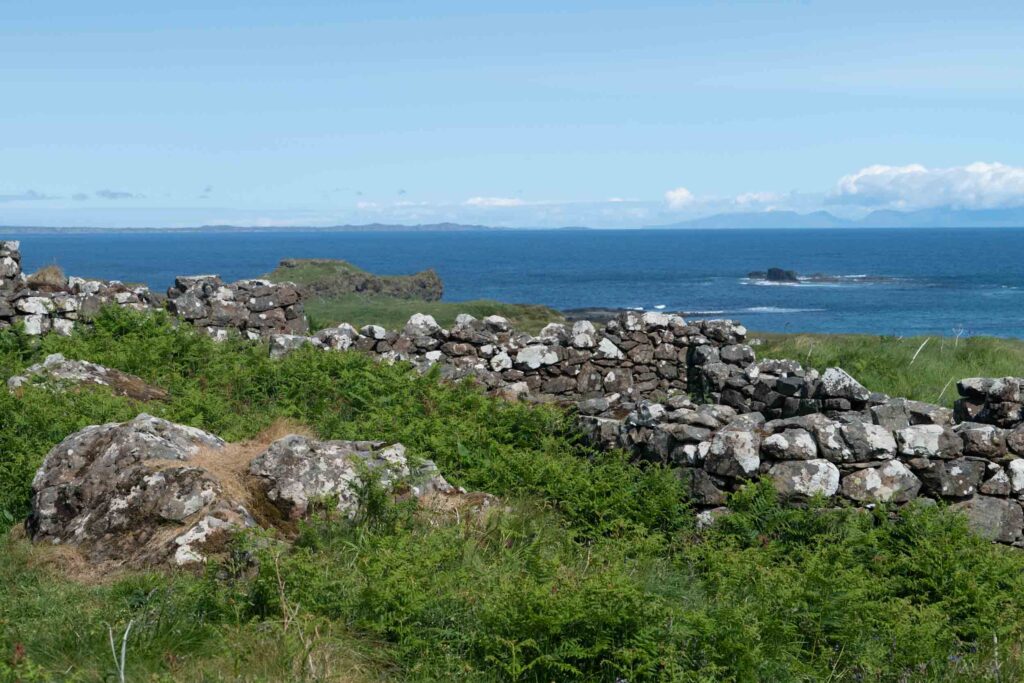
At one point in time the Treshnish Isles, of which there are eight uninhabited and several skerries (small rocky islands or reefs), were ruled by the Lords of the Isles. Currently, there are at least 21 known archaeology sites on the islands, spread across the Dutchman’s Cap, Lunga, Fladda, Cairn na Burgh Mor and Cairn na Burgh Beag. These include two medieval chapels, a 15th- or 16th-century castle and an 18th-century barracks. The tour only goes to Lunga and thus only the ruins of the barracks were accessible.
Today the islands are a main attraction for nature lovers with spectacular wildflowers and many species of seabirds. Surrounding waters contain Orcas and Minke whales though they are not always sighted. But it is the birds that are the main attraction. Perhaps the most endearing of the birds are the puffins which nest on top of the cliffs in burrows. These clown-like birds are not bothered by the people who come to gawk at them and take their pictures.
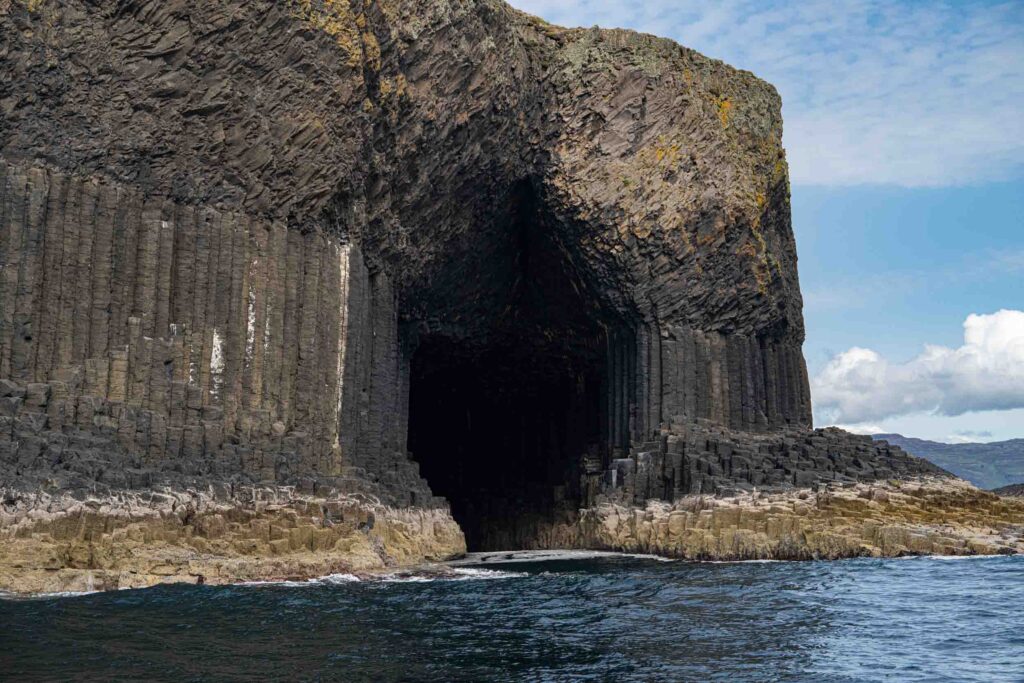
After leaving Lunga we sailed past Staffa, a most unusual and dramatic island off the coast of Mull. The rock formations are unlike anything I have seen in all my travels around Scotland. The most famous section of Staffa is Fingal’s Cave. Romantic composer, Felix Mendelssohn, visited the cave in 1829 and supposedly inspired by the weird echoes in the cave, wrote his overture, The Hebrides, Op. 26.